Monday, November 10, 2014

Forced Identity

            A point in German history that has always fascinated me has been learning how the Nazi party came into power. It is important to know about the events of WWI and the fall of the Weimar republic. When Germany decided to enter into WWI Germans were excited about the idea. It was viewed by many as a great adventure and as an opportunity for Germany to flex its power for the world to see. However, that is not what happened when the war had ended. Germany was declared the official “loser” of the war and obligated to pay war reparations to other countries. This was a difficult transition in the German identity. Before WWI, Germans viewed themselves as strong and proud. After WWI, Germans and the world viewed Germany as weak, poor, and ashamed. The country went into a recession like the rest of the world and it hit Germany hard. Inflation was out of control and even though Germany was not destroyed physically in the war their pride and identity were demolished. The shift from strong to weak, proud to ashamed has shown me how Hitler came into power in the first place.

            The rise of the Nazi party and the formation of a new, forced identity was a shift into a new world whether or not the Germans wanted it. It is no surprise that the Germans were feeling weak and defeated once the Weimar Republic collapsed. A country without an identity, without leadership is not really a country. So, when a party came along fighting for the common German people the Germans were eager to listen. The Nazi party wanted to make Germans proud of being German again. They wanted the Vaterland to be a land of superiority and strength. It is easy to get behind a group that makes you feel good and proud. Once the Nazi party had become the political power of Germany the new, forced identity began. Propaganda was a major tool in forming the Nazi/German identity. Thanks to the mind of Joseph Göbbels the new German identity was forced down the throats of Germans. With the images of the “perfect Germans”   also came the images of those deemed inferior by the Nazi party. The Germans decided that they would overlook the suppression and violence against minority groups in Germany because they believed the good Germany was experiencing outweighed the negative.


 It is incredibly complicated to attempt to understand how the Germans felt about themselves.  Germans have experienced incredible highs and incredible lows throughout their history, from the Holy Roman Empire to today. Many aspects of German identity are shaped around war and violence. This makes me think of the term Vergangenheitsbewältigung, which is coming to terms with the past. For Germans this really looks at how Germans view themselves today and how they understand their past. It is not an easy task for Germans to look at their past because of the horrors that have occurred. An immense of guilt is felt and it is common for memorials to be built in order to serve as a reminder. They want to be reminded so that those things never happen again. However, I still believe Germans view themselves as a strong people who have endured many hardships and have come out stronger. 

Friday, September 12, 2014

Coming to Terms with Berlin's Past

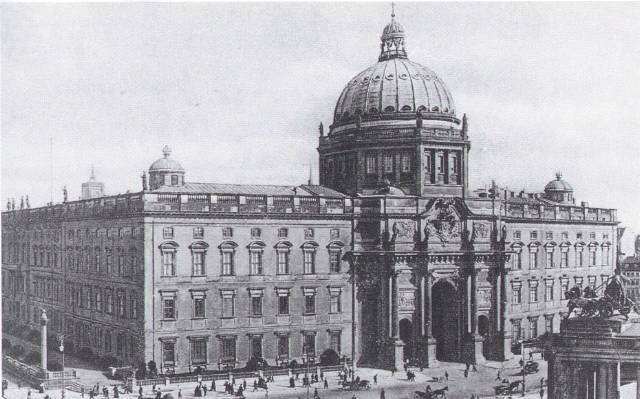
The Berliner Schloss is a landmark that really interested me while watching the documentary. Castles are a major part of Germany because the country was split into many smaller provinces before unification. The county’s history is rich with castle and is typically celebrated by the country and tourists. But, the Berliner Schloss fell in the Russian zone of Berlin after WWII. Since the castle symbolized everything the communist regime was against, it was decided that the castle was to be demolished.
Berliner Schloss
http://www.robothek.de/Schloss/Original.JPG


The SED then built a cultural center for East Berlin where the castle once stood. That building was later demolished after the reunification of Germany and the castle is now being rebuilt.
The Palace of the Republic
http://graphics8.nytimes.com/images/2006/01/09/arts/Ouro3650.jpg
The story of these buildings to me symbolizes the struggle that Germans have with their past. To East Germans, the castle symbolized an oppressive, imperial, and militarized rule. While the cultural center served as a symbol to the future and community. To West Germans, the castle was a symbol of pride for their past and for Fredrick the Great. The cultural center was a symbol of the oppressive, communist regime in the east. At one point in the documentary two Germans share opposing views about the buildings and I believe these two embody the struggle of the German people. Should Germany move forward and forget their past because the past is filled horrors, mistake, and war? Or should Germany honor their past in order to never forget what happened and find moments in their past to be proud of? It is almost as if some Germans will feel guilty if they honor past. But, I think it is important to face the past and comes to terms with it in order to move forward with life. To ignore the past is to act as if it never happened.


            Thinking of Berlin as a mecca for freedom is not something the general public typically thinks about. But, it was just that in the 1600’s. In order for Berlin to gain a population, the ruler offered freedom to those prosecuted for religious reasons among others. This led to a large Jewish community in Berlin. The liberal ideals of Berlin were continued by Frederick the Great. But, he also brought militarized ideals as well. These two conflicting ideals get to the heart of Berlin throughout its history. One side of Berlin is wildly liberal; focused on freedoms of choice, sexuality, thought, and life. The other side of Berlin is covered in anger and bloodshed that stem from the militarized ideals. How can one city have two completely separate tracks that never intersect in a positive way? We can examine Berlin in the 1920’s, which was a sexual revolution in the world. But, once the Nazi party came into Berlin to fight against this liberalism, the face of Berlin changed dramatically. The ideals of Berlin seem to flip flop from one extreme to another. To this day Berlin deals with clashes in the streets, while still being a mecca for liberal freedoms. I think it is important to understand both ideals that Berlin has had woven into its history because it can help us understand the history of Berlin and what it means to be a Berliner. 

Tuesday, September 9, 2014

Martin Luther and the Church

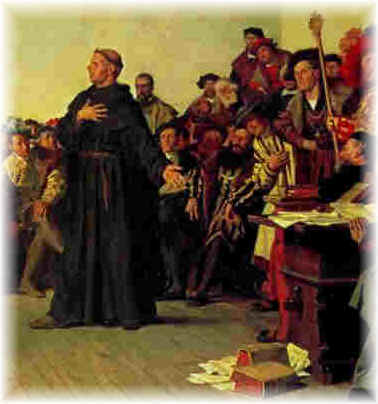
Martin Luther and his conflicts with the Church is something I have studied at length in my previous German courses. Every time I revisit this topic the same thing always sticks out to me; Martin Luther fought for Germans to have a personal relationship with God. He felt the Church was creating fear in order to secure more money for them to live in luxury. The Germans believed that their souls were in constant danger of going to Hell if they did not follow the ways and guidelines that the Church laid out for them. Every step of their lives were guided exactly how the Church wanted them to be and that included giving money to the Church. Germans at the time were incredibly superstitious and Martin Luther believed the Church exploited these superstitions for financial gain.

Before Martin Luther’s writings Germans believed they must fully follow the Church in order to reach salvation at the end of their lives. Luther believed quite the opposite. However, it is important to note that Luther was never against the Bible or God, only against the Church as a political structure.  When Luther translated the Bible from Latin to German that opened an entire new world to a majority of Germans who previously could not read the word of God for themselves. It allowed them to bring God into their homes in a more personal way than before. Germans could read the words and interpret on their own. Rather than have a clergy member give the Church’s interpretation of the word of God. The German’s began to find truth in what Luther was preaching and wanted to take the power for themselves. Why should one giant enterprise hold the power and strike fear into the hearts of its followers? The Germans were able to learn from their own readings of the Bible what they truly believed was right from the word of God.
Luther nailing the 95 Thesis
http://cdn.gospelherald.com/data/images/full/3982/image.jpg?w=720
Luther’s stand against the Church also served as a symbol of standing up against oppression. Germany was split into smaller principalities with many rulers ruling over the people of that land. Some rulers took care of their people while others took advantage of theirs. Taking all of the goods and wealth for themselves and leaving their people to live in horrible conditions. They used Martin Luther’s stand against the Church as motivation to stand up to the oppressive and unfair rulers. This led to numerous peasant uprisings throughout the country. Luther’s stand against the Church showed German’s that you can stand up to those above you; even if they are bigger, stronger, and scarier. If you have a noble cause then you have to stand up for yourself and what you believe is right.

An interpretation of Luther in Worms.
http://www.concordianews.org/kids/2009/reform/worms.jpg
The belief that one’s relationship with God is a personal one is a belief I hold very dear to my heart. I do not conform to the traditional ways of worships by attending Church regularly or discussing my faith with others. It is a personal relationship I keep to myself. Taking my own time to read scripture and praying is some of the most precious time that I have to myself. I do not feel that I need anyone to validate my relationship with God. 

Wednesday, September 3, 2014

German Stereotypes

                A topic that struck me was the movement that the German humanists worked to remove the negative connotations associated with the word “German.”  In the first chapter we learned that the term German was given to barbarians from Northern regions of Europe. The association of Germans and barbarians did not seem to diminish throughout the years. Rumors circulated of German’s being drunken barbarians in Europe and scholars had a difficult time standing up to these vicious words. But, once the German humanists starting standing up for German’s as a people and a culture, it gave way to the ideals of German superiority.
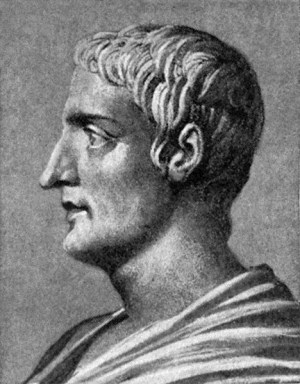
Roman historian Tacitus wrote a history of early Germania. The German humanists used his writings to fuel improving the German name and culute.
http://www.historytoday.com/sites/default/files/tacitus.jpg


            One reason I found this small section worth thinking about further is that the negatives attached to being German back in the 15th century and the same negatives that exist in today’s world. I think back to the first meeting we had as a group. Dr.Wolf asked us to describe what we thought of when we heard the word German or Germany. The negatives were drunks and Nazis. It would seem over thousands of years that Germany has not been able to shake the negatives, despite having a rich culture and a thriving pulse in the technology industry.

            The ideals of German superiority also continued to live on and came to a head during the rise of the Nazi party. The Germans wanted to be thought of as a strong people who deserved more than they were getting out of life. In order to feel superior and regain a name in the eyes of the world after WWI, the Nazis blamed someone else. It is easy to feel superior when you blame someone else for your troubles and take no responsibilities for your actions. That is exactly what happened in Germany. The Nazis also wanted to build Germany into a country rich with culture. However, they went about that by robbing fine art and artifacts from all of Europe. The Nazis did not find a way to make the German name strong once more. All they manage to do was reinforce the negative stereotypes that followed the name for so many years.


It is interesting to think that no matter how hard a group of people try to shake stereotypes, something always happens to reinforce those stereotypes. The German people continue to be haunted by their past and their origins. Whenever I share that I am studying German I am given a few responses; I am told it is an ugly, harsh language, someone makes a joke about beer, or someone brings up Nazis. But, that is why I study German because I want to teach people that Germany is more than its stereotypes. 

Tuesday, May 20, 2014

Warum Deutschland?

I am currently pursuing my major in German and a minor in secondary education. Since I was a Junior in high school I have known I wanted to be a German teacher. It only makes sense that as a German teacher I spend time in Germany. Next December, I will be in my Senior year and a term away from student teaching. I knew that if I did not get out and experience Germany now I may never have another opportunity.

I have had an interest in Germany my entire life because my parents and sister lived in Germany 1985-1988. My Dad was in the Army and stationed at Panzer Kaserne in southern Germany near Stuttgart. Even though we will not be traveling to this area my families time in Germany is because of Germany's history. Panzer Kaserne was used in WWII and it is where the Germans stored their tanks. While my dad was there it was during the Cold War and the Americans were their to protect Germany and Europe.
Panzer Kaserne Main Gate


Most Americans only associate Germany with WWII, Nazis, and the Holocaust. I attended public school and through my education what I learned about Germany was solely related to the Holocaust. I was always fascinated by the Holocaust and I am not sure where this fascination stemmed from. Maybe it is from my Grandmother's family Jewish heritage; their last name is Lieberstein. I remember reading many stories about the Holocaust; Milkweed, Night, and The Diary of Anne Frank to name a few. Since I have been studying I have learned so much more about the Holocaust from more than just books. I have analyzed first hand accounts, read books, viewed films, and really focused on the lives of Germans during this time period. The chance to visit a concentration camp this December is going to be a very sobering experience, something that is giving me mixed emotions. I look forward to the experience, but at the same time I feel saddened by what I will be walking into.
Saschenhausen Main Gate
Overall, I am eagerly awaiting for this coming December. I am going to be fulfilling a life-long dream of mine; visiting Germany. I will be getting to experience so much more than I thought I would. I am going abroad, somewhere that isn't Cancun. I am going abroad with people I do not know that well. This is going way out of the comfort zone and I cannot wait for what I am going to experience and what I am going to learn about myself.

(Word Count 428)